Western honey bee
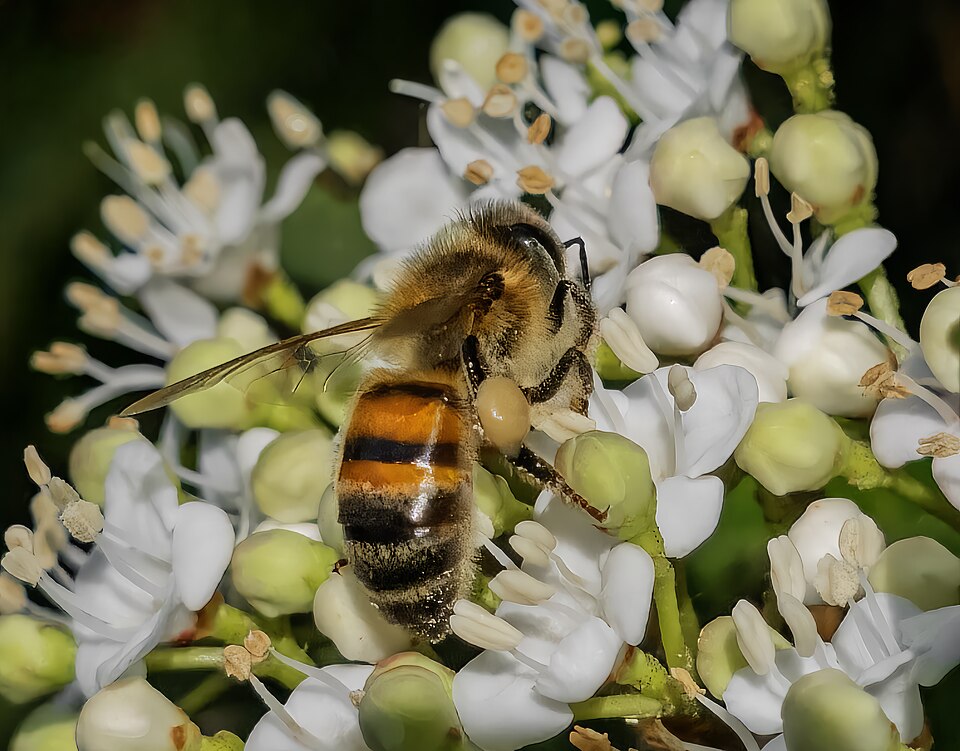
The Western honey bee (Apis mellifera) is a herbivorous insect native to Europe and North America.
The western honey bee is the most common of the 7–12 species of honey bees worldwide. The genus name Apis is Latin for 'bee', and mellifera is the Latin for 'honey-bearing' or 'honey-carrying', referring to the species' production of honey. — Wikipedia
- Scientific name
- Apis mellifera
- Class
- Insect
- Family / order
- Apidae
- Diet
- Herbivore
- Habitat
- Terrestrial
- Found in
- Europe, North America
- Lifespan
- 8 years
- Conservation status
- Data Deficient
What does a Western honey bee eat?
The western honey bee is a herbivore, feeding on plants.
How long do Western honey bees live?
In the wild, the western honey bee can live up to about 8 years.
Where do Western honey bees live?
Western honey bees are found in Europe and North America, in terrestrial habitats.
Is the western honey bee endangered?
The western honey bee is currently listed as “Data Deficient” on the IUCN Red List.